

Most people who take methylene blue do it in the dark. Figuratively speaking.
They swallow their drops, go about their day, and never think about what happens next at the cellular level. And most people who own a red light panel stand in front of it for ten minutes without understanding what the photons are actually doing once they pass through skin.
Both tools work. Independently, the research behind each one is substantial. But here's the part that almost nobody talks about: methylene blue and red light therapy converge on the exact same enzyme in your mitochondria. They just arrive from opposite directions.
One donates electrons. The other donates photons. Same target. Two pathways. And the animal research suggests the combined effect is significantly greater than either one alone.
This isn't speculation. It's published science from one of the leading mitochondrial researchers in the world. But most guides on this topic are written by med spas trying to sell you a $75 clinic session, and they skip the mechanism entirely.
So let's fix that.
How Methylene Blue and Red Light Therapy Work on the Same Enzyme
To understand why stacking these two makes sense, you need about 60 seconds of mitochondrial biology. Stay with me.
Your cells produce energy (ATP) through the electron transport chain, a series of protein complexes inside the mitochondria. Electrons get passed down the chain like a relay race: Complex I, Complex II, Complex III, cytochrome c, and finally Complex IV (cytochrome c oxidase). At the end, oxygen accepts the electrons and water is produced.
Complex IV, cytochrome c oxidase, is the final and rate-limiting step. It's where the bottleneck happens. And it's precisely where both methylene blue and red light therapy do their work.
Red light therapy (photobiomodulation) works by delivering photons at specific wavelengths, primarily 660nm (red) and 810-850nm (near-infrared), that are absorbed by cytochrome c oxidase. This photon energy dissociates nitric oxide from the enzyme, essentially removing a brake that slows down electron transport. The result: more electrons flow through Complex IV, more ATP gets produced.
Methylene blue takes a completely different route to the same destination. MB acts as an alternative electron carrier. When complexes I or III are damaged or sluggish, whether from aging, environmental toxins, or injury, electrons get stuck. MB picks up those stranded electrons and shuttles them directly to cytochrome c, bypassing the damaged complexes entirely. From there, the electrons reach Complex IV and contribute to ATP production through the normal pathway.
Two pathways. One enzyme. This is why researchers got interested in combining them.
What the Research Actually Shows
The most important work on this combination comes from Dr. Francisco Gonzalez-Lima's lab at the University of Texas at Austin.
In 2008, Rojas and colleagues published a study in Lasers in Surgery and Medicine that tested what happens when you give methylene blue before transcranial near-infrared light therapy. In rats, pre-treatment with MB followed by near-infrared light produced a roughly 67% increase in brain cytochrome c oxidase activity. For comparison, near-infrared light alone produced about a 25% increase, and MB alone produced about a 30% increase.
That's not additive. 25 plus 30 doesn't equal 67. The combination produced something greater than the sum of its parts.
A follow-up study published in Frontiers in Cellular Neuroscience (Rojas et al., 2012) found that the combination of low-dose MB with transcranial near-infrared light improved memory retention in animal models by 43% compared to controls. Each intervention alone produced improvements in the 18-22% range.
Now, a critical note: these are animal studies using injected methylene blue, not oral supplements. No human clinical trial has tested this specific combination at consumer supplement doses with consumer red light panels. Gonzalez-Lima himself wrote in a 2020 review that the combination "warrants serious future investigation," which is researcher language for "this looks promising but needs more work."
We're being upfront about this because you deserve to know what's proven and what's mechanistically reasonable but not yet validated in humans. The mechanism is sound. The animal data is compelling. The human data is still coming.
The 660nm Wavelength Match Most People Miss
Here's a detail that should matter more to you than it does to most: methylene blue has a peak light absorption at approximately 660nm.
And 660nm is one of the primary wavelengths that quality red light therapy panels emit.
This isn't a coincidence in the research. It's the reason the combination works mechanistically. MB absorbs photons at 660nm, which can influence its redox cycling behavior. Meanwhile, cytochrome c oxidase also absorbs photons in the red (around 660nm) and near-infrared (around 810-850nm) ranges.
When a panel emits both wavelengths, you're hitting the system from multiple angles: the 660nm photons interact with both MB and cytochrome c oxidase directly, while the 810-850nm near-infrared photons penetrate deeper into tissue and bone.
This is why panels that emit only red light (630nm, 660nm) provide surface-level benefits, while panels that also include near-infrared (810nm, 850nm) can reach the mitochondria in deeper tissues. For this protocol, you want both.
The Photosensitizer Question Nobody Addresses Honestly
We need to talk about something the clinic websites don't mention.
Methylene blue is a photosensitizer. At higher concentrations, when exposed to light, MB can generate reactive oxygen species (ROS). This property is used intentionally in photodynamic therapy (PDT), where clinicians use MB plus light to kill bacteria, cancer cells, or treat infections.
So the obvious question: if MB generates ROS with light, is shining a red light panel on yourself after taking MB actually safe?
The answer depends on dose. At the concentrations used in PDT (which involve direct application of concentrated MB solution to a target area plus high-intensity light), the ROS generation is the point. It's therapeutic destruction.
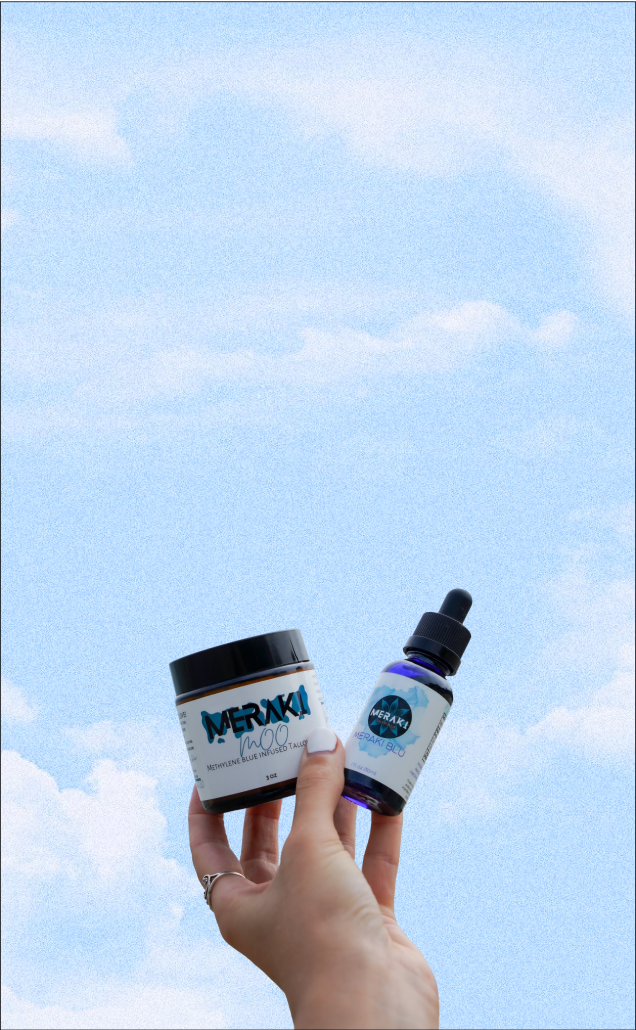
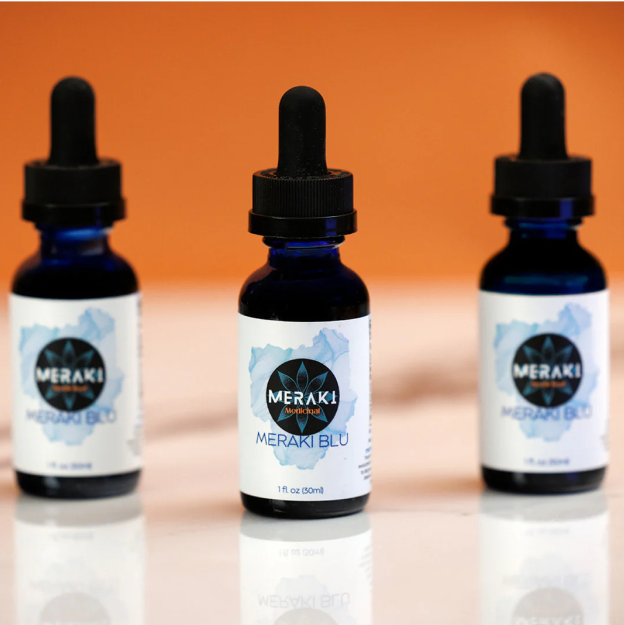
At the low oral supplement doses typically used in biohacking, we're talking about something entirely different. A common dose is around 5 mg (roughly 20 drops of a 0.5% solution like Meraki Blu), which produces very low systemic concentrations. At these levels, the electron-cycling benefit, the ability to shuttle electrons through the transport chain, is the dominant mechanism. Not the photosensitizer effect.
That said, if you're using methylene blue, it's reasonable to be cautious with direct sun exposure. Wearing sunglasses outdoors and avoiding prolonged sunbathing on the days you take MB is a sensible precaution. The controlled light exposure from a red light panel at standard treatment distances is a different situation from broad-spectrum UV exposure.
Why Most Guides on This Topic Fall Short
If you've searched "methylene blue red light therapy" before landing here, you've probably noticed something: almost every top result is from a clinic or med spa.
These pages exist to sell you a $75-per-session in-office treatment. The protocol they describe involves showing up, sitting in a chair, and paying every time. They have zero incentive to explain how you can do this at home for a fraction of the cost.
The information they provide is also usually surface-level. "Both boost mitochondria" is about as deep as it gets. No mechanism. No specific wavelengths. No dosing. No timing. No honest discussion of the photosensitizer concern.
Here's what we think you actually need: the research translated into a practical at-home protocol, with honest caveats about what's proven versus what's mechanistically reasonable.
The At-Home Stacking Protocol
Our founder Vance has been running this stack daily since his TBI recovery. His routine: MB drops first thing, coffee while he waits, then 15 minutes in front of a Vital Pro panel before starting work. He's been doing it for years and it's become as automatic as brushing his teeth.
Based on the available research and the pharmacokinetics of oral methylene blue, here's a practical protocol for combining MB with red light therapy at home.
Step 1: Take Your Methylene Blue
Start with your usual MB dose. If you're new to methylene blue, begin with 1-3 drops (0.25-0.75 mg) of a 0.5% solution. Most experienced users settle around 20 drops (approximately 5 mg). Always take MB in the morning, as it has a mild stimulant effect and can interfere with sleep if taken later.
Take it sublingually (under the tongue) for faster absorption, or mixed into a small amount of water. Your tongue and urine will turn blue. This is normal and harmless.
Step 2: Wait 30-60 Minutes
MB begins absorbing within 15-30 minutes after oral dosing, with peak plasma levels at 1-2 hours. A 30-60 minute wait allows MB to reach meaningful blood concentrations before you add the red light stimulus.
Use this time for your morning routine. Coffee, breakfast, journaling, whatever. The wait isn't wasted time.
Step 3: Red Light Session
Stand or sit in front of your red light panel at the manufacturer's recommended treatment distance (typically 6-12 inches for most panels). A session of 10-20 minutes covers most protocols.
For this stack, panels that emit both 660nm (red) and 810-850nm (near-infrared) wavelengths are ideal. The red wavelengths interact with both MB and cytochrome c oxidase at the surface level, while the near-infrared penetrates deeper into tissue and bone.
If you're targeting cognitive function specifically, position the panel to cover your forehead and temples. For full-body energy and recovery, a larger panel that covers more surface area is appropriate.
Step 4: Frequency
This is a daily protocol. Both MB and red light therapy show the best results with consistent daily use rather than occasional sessions. The mitochondrial adaptations compound over time.
Timing Summary
| Step | What | When |
|---|---|---|
| 1 | Take MB drops (1-20 drops based on experience) | Morning, on empty stomach or with light food |
| 2 | Wait for absorption | 30-60 minutes |
| 3 | Red light session | 10-20 minutes at recommended distance |
| 4 | Repeat | Daily, morning routine |
A note on timing: the 30-60 minute window is a reasonable estimate based on MB pharmacokinetics, but it hasn't been validated in a controlled human trial specific to this combination. Some users report benefits with a 15-minute wait, others prefer a full hour. Start with 30 minutes and adjust based on how you feel.
What to Look for in a Red Light Panel for This Protocol
Not all red light panels are created equal. For the MB stacking protocol, here's what matters:
Wavelengths: You want both 660nm (red) and 810nm or 850nm (near-infrared). Panels with only red wavelengths miss the deeper tissue benefits. The Vital Pro panel, for example, emits at 630nm, 660nm, 810nm, and 850nm, covering both surface and deep-tissue wavelengths.
Irradiance: Higher irradiance means more photon delivery per unit time. Look for panels with published irradiance specs and third-party testing.
Low EMF: You're standing close to this device. Low electromagnetic field emissions at treatment distance matter for safety.
FDA clearance: Indicates the device meets safety standards for consumer use.
Size: Larger panels cover more body surface area per session. A targeted panel works for face and brain-focused protocols. Full-body panels or multiple panel setups are better for systemic benefits.
Who Should Not Use This Stack
This section is non-negotiable. Read it.
Don't combine methylene blue with SSRIs, SNRIs, or MAOIs. MB inhibits monoamine oxidase and combining it with serotonergic medications creates a risk of serotonin syndrome, which is a medical emergency. If you take any antidepressant or anti-anxiety medication, talk to your doctor before using MB.
Don't use methylene blue if you have G6PD deficiency. MB can cause hemolytic anemia in people with this genetic enzyme deficiency. G6PD testing is available through most standard blood panels.
Pregnant or breastfeeding women should consult their physician before using either methylene blue or red light therapy.
If you have active cancer or are undergoing cancer treatment, talk to your oncologist. Both MB and red light therapy have complex interactions with cancer biology that require medical supervision.
Frequently Asked Questions
Can you combine methylene blue with red light therapy?
Yes. Both target cytochrome c oxidase in the mitochondrial electron transport chain through different mechanisms. MB donates electrons; red and near-infrared light stimulates the enzyme with photon energy. Animal research from Gonzalez-Lima's lab showed the combination increased cytochrome c oxidase activity by approximately 67%, compared to roughly 25% for light alone and 30% for MB alone.
How long after taking methylene blue should you do red light therapy?
Most protocols suggest 30-60 minutes after oral MB. MB begins absorbing within 15-30 minutes, with peak plasma levels at 1-2 hours. A 30-60 minute wait allows meaningful blood levels while remaining practical. This timing has not been validated in human trials but is consistent with MB absorption kinetics.
What wavelength of light activates methylene blue?
MB has peak absorption at approximately 660nm, which is in the red light spectrum. This is the same wavelength most quality red light panels emit. Near-infrared wavelengths (810nm, 850nm) also stimulate cytochrome c oxidase directly, making dual-wavelength panels the best choice for this protocol.
Does methylene blue make you more sensitive to light?
At low oral supplement doses (0.25-5 mg), the electron-cycling benefit dominates over the photosensitizer effect. Some users do report mild light sensitivity. Wearing sunglasses outdoors after taking MB is a reasonable precaution. The controlled exposure from a red light panel at standard distances is different from broad-spectrum UV.
Is methylene blue and red light therapy safe together?
For most healthy adults using low-dose oral MB with consumer red light panels, the combination is generally well-tolerated. Key safety considerations: no SSRIs/SNRIs/MAOIs with MB (serotonin syndrome risk), start with low MB dose before adding red light, avoid if you have G6PD deficiency, and consult your physician if pregnant or breastfeeding.
What does methylene blue do for mitochondria?
MB acts as an alternative electron carrier in the electron transport chain. When complexes I or III are damaged or inefficient, MB picks up stranded electrons and shuttles them directly to cytochrome c, bypassing the damage. This restores ATP production. It is the only compound known to perform this specific bypass function.
The Bottom Line
Methylene blue and red light therapy are two of the most researched tools in the mitochondrial health space. Each one works independently. But the fact that they converge on the same enzyme, cytochrome c oxidase, through completely different mechanisms, creates a logical case for stacking them.
The animal research is specific and compelling: roughly 67% improvement in cytochrome c oxidase activity with the combination versus 25-30% for each alone. The human research is still catching up, and we should be honest about that gap. What we have is strong mechanistic reasoning, strong animal data, and growing real-world experience from the biohacking community.
Meraki Medicinal is the only brand that offers both halves of this protocol: Meraki Blu, our 0.5% USP pharmaceutical-grade methylene blue solution, and Vital Red Light panels with dual red and near-infrared wavelengths. We did not design this as a marketing play. Our founder, Vance Elrod, recovered from a TBI using methylene blue and has been stacking it with red light therapy in his own protocol for years. We sell what we use.
If you already take methylene blue, adding a red light panel to your morning routine is the highest-leverage upgrade you can make. If you already own a panel, pharmaceutical-grade MB is the missing piece.
Two pathways. One enzyme. One protocol.
Explore the Meraki Blu + Red Light Protocol →
This article is for informational purposes. It is not medical advice. Methylene blue is a supplement, not an FDA-approved treatment for any condition discussed here. The combination protocol described is based on published animal research and mechanistic reasoning, not human clinical trials of this specific combination. Always consult a healthcare provider before starting new supplements, especially if you take prescription medications.
References
- Rojas JC, Bruchey AK, Gonzalez-Lima F. "Neurometabolic mechanisms for memory enhancement and neuroprotection of methylene blue." Progress in Neurobiology. 2012;96(1):32-45.
- Rojas JC, Bruchey AK, Gonzalez-Lima F. "Low-level light therapy of the eye and brain." Lasers in Surgery and Medicine. 2008.
- Gonzalez-Lima F, Barrett DW. "Augmentation of cognitive brain functions with transcranial lasers." Frontiers in Systems Neuroscience. 2014;8:36.
- Gonzalez-Lima F. "Neuroprotective and neuroenergetic effects of methylene blue in the central nervous system." Review. 2020.
- Tucker D, Lu Y, Zhang Q. "From Mitochondrial Function to Neuroprotection: An Emerging Role for Methylene Blue." Molecular Neurobiology. 2018;55:5137-5153.